

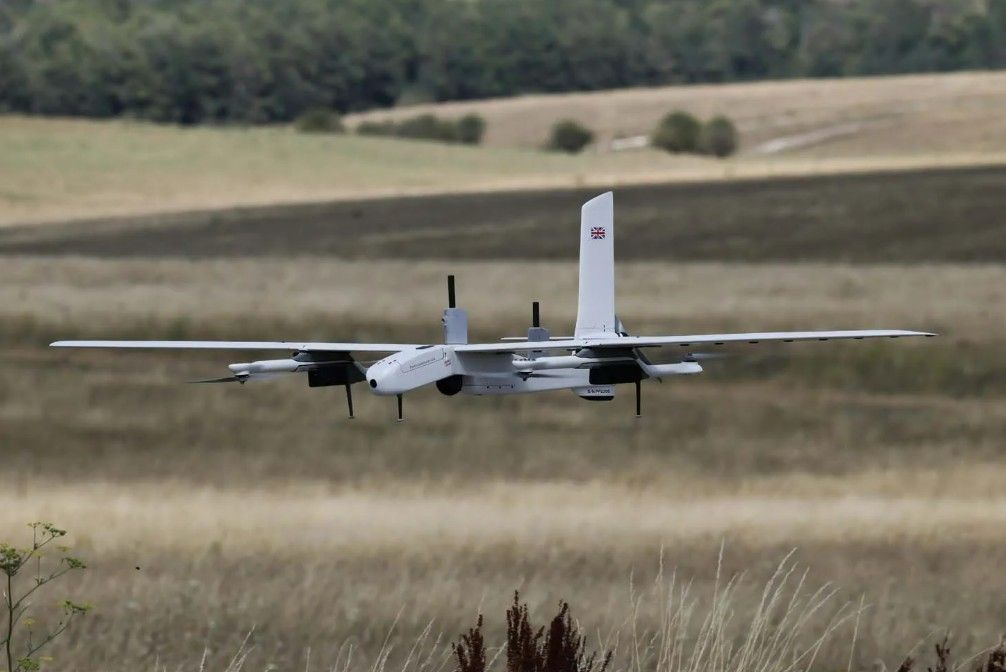
An armada of aerial and surface drones operating alongside traditional naval and aviation assets has moved closer to reality after the Royal Navy demonstrated long-range coordination of multiple uncrewed systems during the Dragon Rider trial.
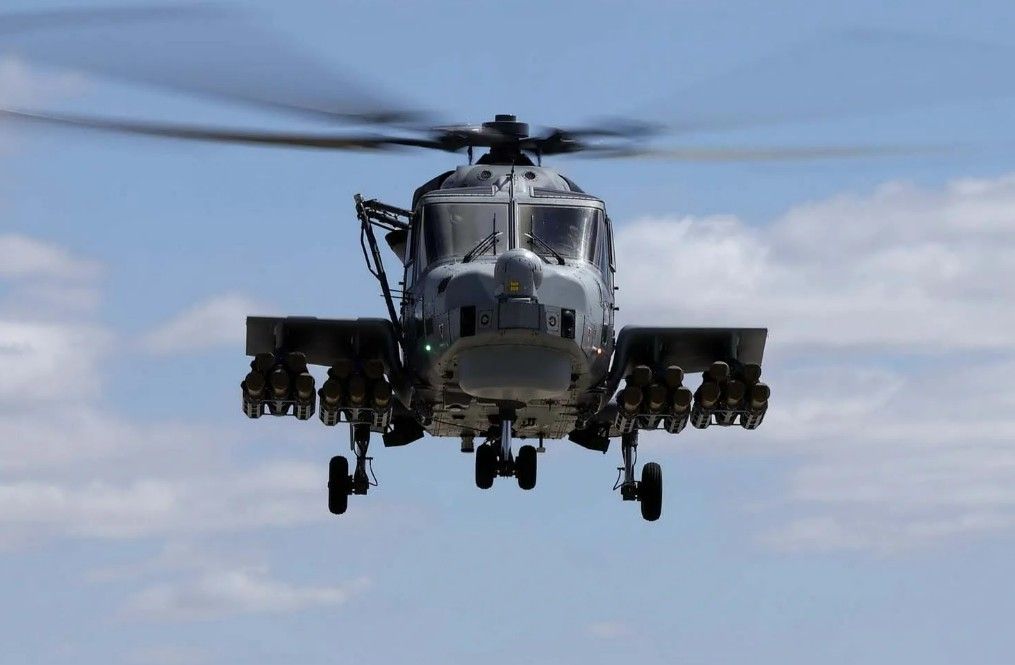
Using a specially-modified Wildcat maritime strike helicopter, aircrew, drone operators and tech experts showed it is possible for multiple uncrewed systems to work seamlessly with traditional air and sea power over considerable distances.
The trials show the Hybrid Navy plans in action, with drones and crewed ships and helicopters working together to advance the integration of new systems with current equipment. The activity was spread across more than 200 miles of southern England: from the Lizard peninsula to Somerset and Salisbury Plain.
They demonstrated the potential of a new, ready-to-use system which links Royal Marines on the ground with Wildcat helicopter crews, ship Commanders and uncrewed drones, according to the navy.
The week-long workout by the Maritime Aviation Strike Operational Advantage Group (formally the Wildcat Maritime Force), which operates the Wildcats at RNAS Yeovilton in Somerset, built on the initial Eagles Eye trial held in Cornwall back in January.
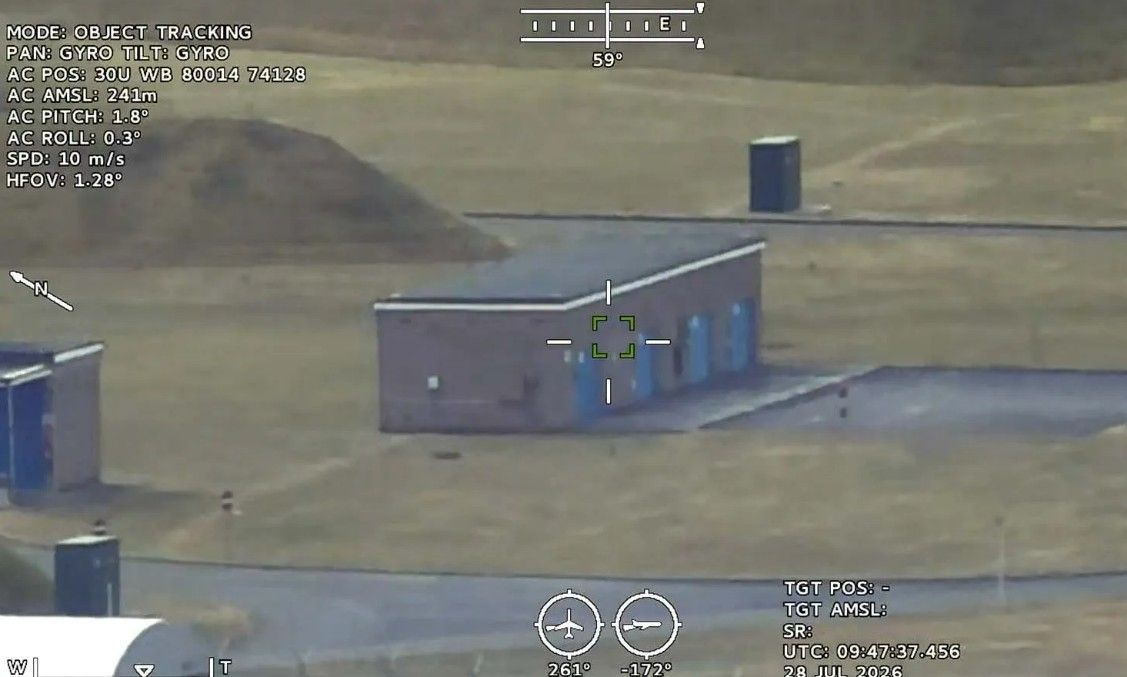
During that trial, for the first time drones shared live data with Wildcat crews allowing the latter to target a moving vehicle before taking it to the fjords of Norway on Exercise Tamber Shield. Dragon Rider vastly expanded the scope of future drone operations – which are central to the Hybrid Navy concept of tomorrow’s Royal Navy. A Wildcat fitted with additional sensors relayed data fed from multiple drones flying over southern England to operators in a central hub at Yeovilton.
In doing so, the exercise vastly extended the range at which drones can operate ahead of a ship or task group – something previously limited by how far their radio signals could reach, the navy highlighted.
Participants interacted with real-time video feeds from multiple drones and practiced identifying targets whilst sending secure messages across the network. This was achieved through a communications system battle-tested in Ukraine – known as a Mobile Ad-hoc Network, or MANET for short.
Credit: Royal Navy
Credit: Royal Navy
Credit: Royal Navy
“The trial proved that this low-cost system is ready for the Royal Navy to use right now,” said Lieutenant Commander Rhydian Edwards, who has been leading the drive to integrate drone tech with the Wildcat force.
“This successful test is a major step forward in keeping human crews safer by letting drones handle dangerous tasks further ahead of the main military force, whilst also greatly increasing the number of units we can field at the same time.”
The trials were conducted alongside a number of small/medium-sized UK, US and Norwegian companies. The next step is to introduce satellite communications into the system which will ultimately allow commanders to securely control fleets of drones anywhere in the world from a safe location back home.